

Etsy Seller Tax UK: 2026 Guide to Records, VAT and Self Assessment
Etsy seller tax UK guide for 2026: the £1,000 trading allowance, Self Assessment, VAT threshold, expenses and records to keep.
Etsy Seller Tax UK: 2026 Guide to Records, VAT and Self Assessment
Etsy seller tax in the UK starts with a slightly awkward truth: the amount that lands in your bank is rarely the number you need for your tax return. Etsy fees, refunds, postage, payment processing, materials and stock can all sit between the customer’s order and your payout. Get that trail right from the first sale and your figures stay useful when Self Assessment, VAT, or Making Tax Digital comes into view.
Quick summary: the £1,000 trading allowance is based on gross trading income, not profit or your net Etsy payout. Once your sales and other trading income go above £1,000, you will usually need to tell HMRC. For 2025/26 income, a first-time Self Assessment registration is normally due by 5 October 2026. The normal VAT registration threshold is £90,000 of taxable turnover, tested on a rolling 12-month basis and also against the next 30 days.
If you have been selling handmade goods, digital downloads, vintage items, craft supplies, or a growing side business through Etsy, begin with a clean sales record before trying to calculate tax. Our bookkeeping service can put the reports, bank activity and receipts into a usable routine, while our Self Assessment support can help when it is time to report the result.
Etsy seller tax UK: start with the trade, not the platform
Etsy is the sales channel. It does not change the basic UK tax question: are you trading with a view to making a profit? A person occasionally clearing unwanted possessions is different from somebody making, buying, marketing and repeatedly selling items as a business. The facts matter, not the label on the app.
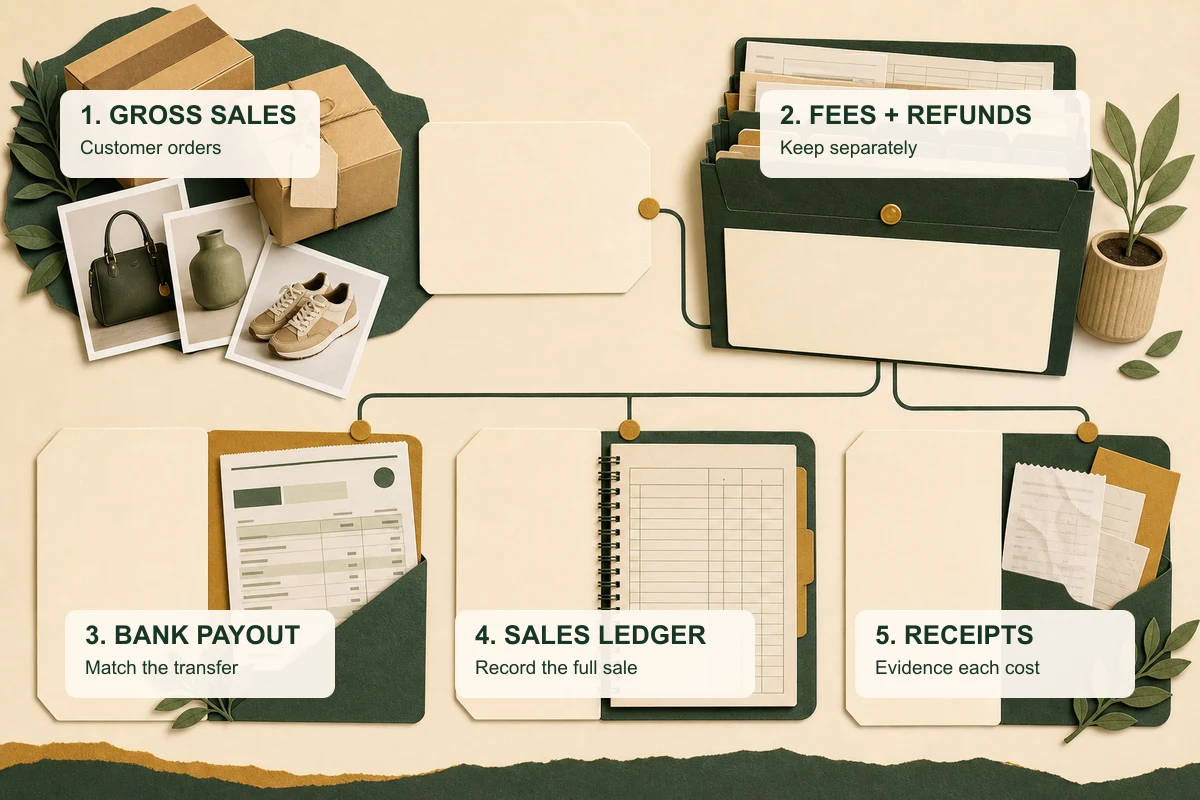
For a genuine trade, income can include more than the product price. Start from the gross amount customers paid for goods, delivery and any other charge connected with the sale. Then keep the costs separately. Etsy’s transaction, listing, processing and advertising fees are not a reason to record only the net payout. They are business costs that need their own evidence.
Platform reporting has made this more visible. Digital platforms may collect seller information and report data to HMRC under the reporting rules that began from 1 January 2024. That report does not create a new tax charge and it does not decide whether you owe tax. It does mean your own record should be able to explain the figures. HMRC’s digital platform reporting rules confirm that platforms can report sellers of goods as well as services.
There is a practical reason to keep your own working papers even if Etsy sends a year-end statement. A report may show sales totals, while your tax calculation needs refunds, stock, materials, postage, packaging, advertising and other costs. If you sell both through Etsy and at fairs, on your own website, or through another marketplace, you need the whole trade in one place.
The £1,000 trading allowance: gross sales matter
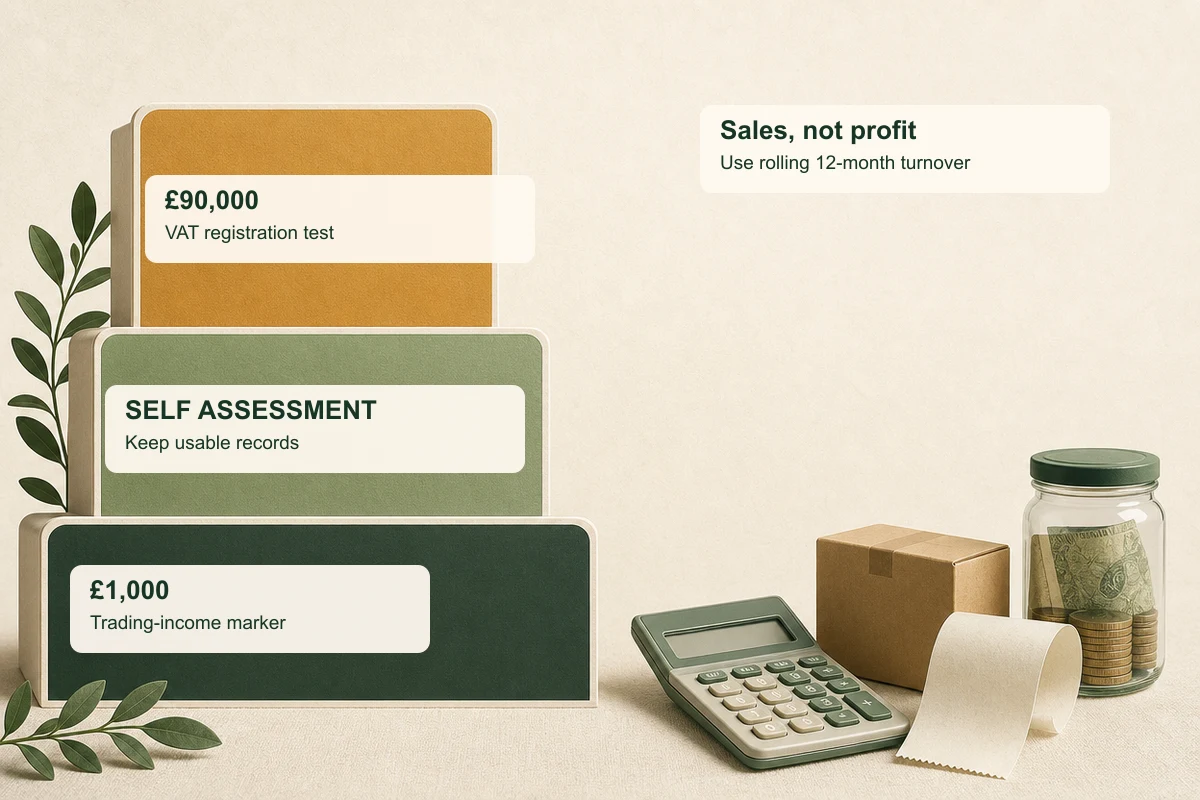
The trading allowance is often described as a £1,000 tax-free allowance. That shorthand is useful, but it can cause a messy surprise. The test is usually your gross trading income, before Etsy fees, postage costs, materials or other expenses.
If your annual gross trading income is £1,000 or less, the allowance may cover it. Once gross income goes above £1,000, you will usually need to report the trade through Self Assessment. You can then normally deduct your actual allowable expenses or claim the £1,000 allowance, but not both for the same trade. HMRC’s current guidance on tax-free allowances is the place to check the exceptions and the detail.
Worked example 1: £950 paid out is not the whole story
Mina sells handmade candles. During 2026/27, customers pay £1,450 through Etsy. Etsy deducts £145 in fees and she spends £420 on wax, jars, postage and packaging. Her bank receives £885 after the fees and some costs have been paid.
| Calculation | Amount |
|---|---|
| Gross customer sales | £1,450 |
| Etsy fees | (£145) |
| Materials, postage and packaging | (£420) |
| Trading profit before any other costs | £885 |
Mina is over the £1,000 gross-income marker even though the figure left after those costs is lower. Her taxable profit may be £885 if all the costs are allowable, but she should not decide that the trade sits outside Self Assessment just because the bank balance looks modest. That is why gross sales, costs and net payout should be three separate lines in your records.
Your position can differ if you have employment, rental income, capital gains, another trade, or a notice from HMRC to file a return. Treat the allowance as a useful rule, not a substitute for checking the full facts.
When to register for Self Assessment and what to file
If you first had taxable Etsy trading income in the tax year that ended on 5 April 2026, you normally need to tell HMRC by 5 October 2026. That deadline matters for a new seller who has never filed, or someone who previously stopped filing and now needs to return to Self Assessment. The online tax return and payment deadline for 2025/26 is 31 January 2027.
Do not leave the registration until January. You need a Unique Taxpayer Reference, access to HMRC’s online service and time to reconcile a full tax year. HMRC says that a late registration can lead to a different filing date in the letter or email it sends, but the tax is still due by 31 January 2027. Its Self Assessment deadlines page has the current dates.
Your return normally brings together the Etsy trade and any other taxable income. A job taxed through PAYE, bank interest, dividends, rental income and another freelance activity can all affect the final bill. That is also why an Etsy sales dashboard cannot tell you the final amount of Income Tax or National Insurance due.
Worked example 2: a simple 2025/26 seller timeline
Assume Daniel started selling prints in June 2025 and made £6,800 of gross sales before 5 April 2026. His allowable costs, including printing, packing, Etsy fees and business postage, are £2,300. His starting profit figure is £4,500.
| Date | Daniel’s useful action |
|---|---|
| 6 April 2025 to 5 April 2026 | Save monthly Etsy reports, invoices and expense evidence |
| By 5 October 2026 | Register for Self Assessment if he needs to file for the first time |
| Autumn 2026 | Reconcile gross sales, refunds, fees and costs to the bank |
| By 31 January 2027 | File online and pay tax due for 2025/26 |
Daniel’s £4,500 is not automatically his tax bill. It is the profit starting point. Personal allowance, employment pay, other income and National Insurance rules can change the result. Still, knowing the real profit early gives him time to reserve cash rather than trying to find it after Christmas, which is rarely anyone’s favourite business expense.
What Etsy expenses can you claim?
You can normally deduct costs that are wholly and exclusively for the trade when working out taxable profit. For a practical Etsy shop, that can include:
- Etsy listing, transaction, processing and advertising fees
- raw materials, components, stock and packaging
- postage and courier costs that you pay
- product photography, sensible advertising and website costs
- a dedicated business bank-account charge or payment-provider fee
- bookkeeping software, accountant fees and relevant insurance
- business use of a phone, broadband, home or car, using an appropriate method and evidence
The word “business” does some important work there. You cannot claim a whole household broadband bill because you sometimes answer Etsy messages from the sofa. You may be able to claim a reasonable business proportion, or use an available flat-rate method where it fits. Keep enough detail to explain how you reached the number.
Stock needs particular care. Buying materials for items you plan to sell is different from buying a tool or piece of equipment that lasts for years. Cash basis is now the normal method for many sole traders, and it can simplify the timing of ordinary expenses. Yet stock still needs watching for pricing, insurance and cash-flow purposes. Our cash basis versus traditional accounting guide explains where the two methods can produce different tax timing.
Worked example 3: fees are costs, not missing sales
Arun receives a customer order for £60, including £5 delivery. Etsy deducts £8 in fees and he spends £12 buying materials and packaging. The bank payout is £52 before he pays the material supplier.
| Record | Amount |
|---|---|
| Gross sale income, including delivery charged | £60 |
| Etsy fees | (£8) |
| Materials and packaging | (£12) |
| Profit before other costs | £40 |
Recording £52 as the sale would hide the fee and make it harder to match the order report to your accounts. Record the £60 sale, then record the £8 fee and £12 cost. The bank movement can then be matched without losing the commercial story.
VAT for Etsy sellers: watch turnover, not profit
VAT has its own test. You must normally register if your taxable turnover for the previous 12 months goes over £90,000, or if you expect taxable turnover to exceed £90,000 in the next 30 days alone. This is a rolling test, not a tax-year total and not a profit figure.
For example, a seller with £7,800 of taxable sales in each of the 12 months to August has £93,600 of rolling turnover. Even if materials and Etsy fees leave a much smaller profit, the registration test has been crossed. A seller with one unexpected wholesale order may also need to register quickly if the next 30 days alone are expected to go beyond £90,000.
Marketplace VAT gets more fiddly where goods are imported, stored outside the UK, or the seller is overseas. HMRC’s online marketplace VAT collection sets out why the location of the goods and the transaction route matter. A UK-based seller of ordinary UK-held goods should not copy advice intended for overseas sellers.
Build records that will still work for MTD
Making Tax Digital for Income Tax started from April 2026 for some self-employed people and landlords with qualifying income over £50,000. The threshold drops to £30,000 from April 2027 and £20,000 from April 2028. An Etsy shop may not be there yet, but a clean monthly routine now is easier than rebuilding two years of spreadsheets later.
Keep a monthly folder or accounting-software record with:
- Etsy sales CSVs and order reports
- refunds, discounts and cancelled-order evidence
- invoices for materials, stock, packaging and postage
- Etsy fee statements and advertising charges
- bank or payment-provider payouts matched to the sales record
- mileage, home-working or other apportionment calculations where relevant
The useful habit is a monthly reconciliation: total the orders, subtract refunds, identify fees, match the payout and file the costs. Do not wait until the end of January and scroll through a year of emails. A modest shop can quickly produce hundreds of transactions and several different fee types.
If your online sales are growing, we can help set up a workable routine through bookkeeping support and look at your VAT or Self Assessment position before a deadline forces the decision. Bring the Etsy reports and bank statements, not just the total payout.
Etsy seller tax UK FAQs
Do I pay tax on the money Etsy pays into my bank?
Tax is normally based on your taxable trading profit, not simply the payout. Start with gross sales and deduct allowable business expenses. Etsy fees should be recorded as an expense, rather than disappearing inside a net-income number.
Does Etsy report my income to HMRC?
Digital-platform reporting rules can require platforms to collect seller information and report relevant information to HMRC. That does not automatically mean you owe tax, but it makes accurate records more important. Check your year-end platform statement against your own sales and refund records.
Can I use the £1,000 trading allowance and claim Etsy fees as well?
Usually, you choose one method for that trade: deduct actual allowable expenses, including eligible Etsy fees, or deduct the £1,000 trading allowance. Do not deduct both. The better result depends on your actual costs, so compare them before filing.
Do I need an accountant for a small Etsy shop?
Not every small shop needs ongoing help. A first review can still be worthwhile when sales pass £1,000, you have a mixture of employment and trading income, your records do not match the payouts, or VAT is approaching. The earlier you sort the bookkeeping, the less it costs to put right later.
Start by exporting the latest Etsy reports and reconciling one month from customer order to bank payout. If the path is unclear, speak to Golden Tree Consulting before the missing information becomes a January problem.

About Golden Tree Consulting
AAT Licensed | ACCA Affiliated
Golden Tree Accounting & Business Consulting provides expert tax, bookkeeping, and advisory services to sole traders and SMEs across Croydon, London, Surrey, and Kent. With multilingual support and decades of combined experience, we help businesses stay compliant and grow.
More Articles You Might Like
Continue exploring our financial insights
VAT Flat Rate Scheme 2026: Is the 16.5% Rule Costing Your Business Money?
VAT Flat Rate Scheme 2026 guide for small businesses, covering the 16.5% limited-cost rule, thresholds, examples and exit checks.
Traditional Accounting vs Cash Basis: 2026/27 Guide for Sole Traders
Traditional accounting vs cash basis explained for 2026/27, with examples, MTD checks, stock, debtors, and tax timing.
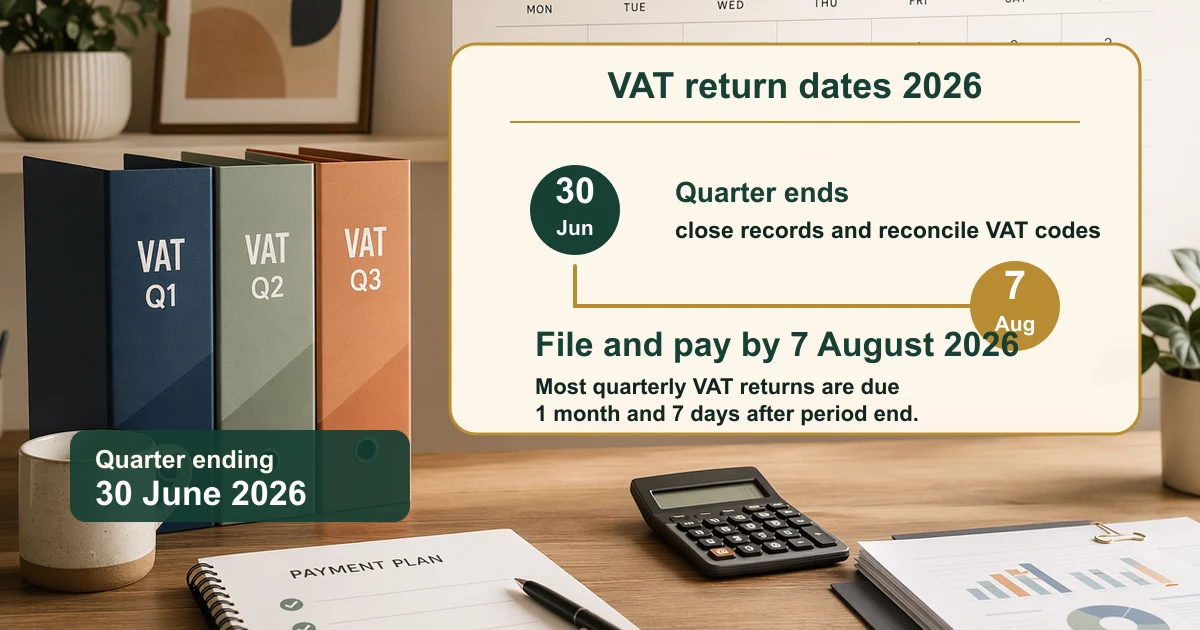
VAT Return Dates 2026: UK Deadline Guide for Small Businesses
VAT return dates 2026 explained for UK small businesses, with quarterly deadlines, payment dates, penalties, and examples.