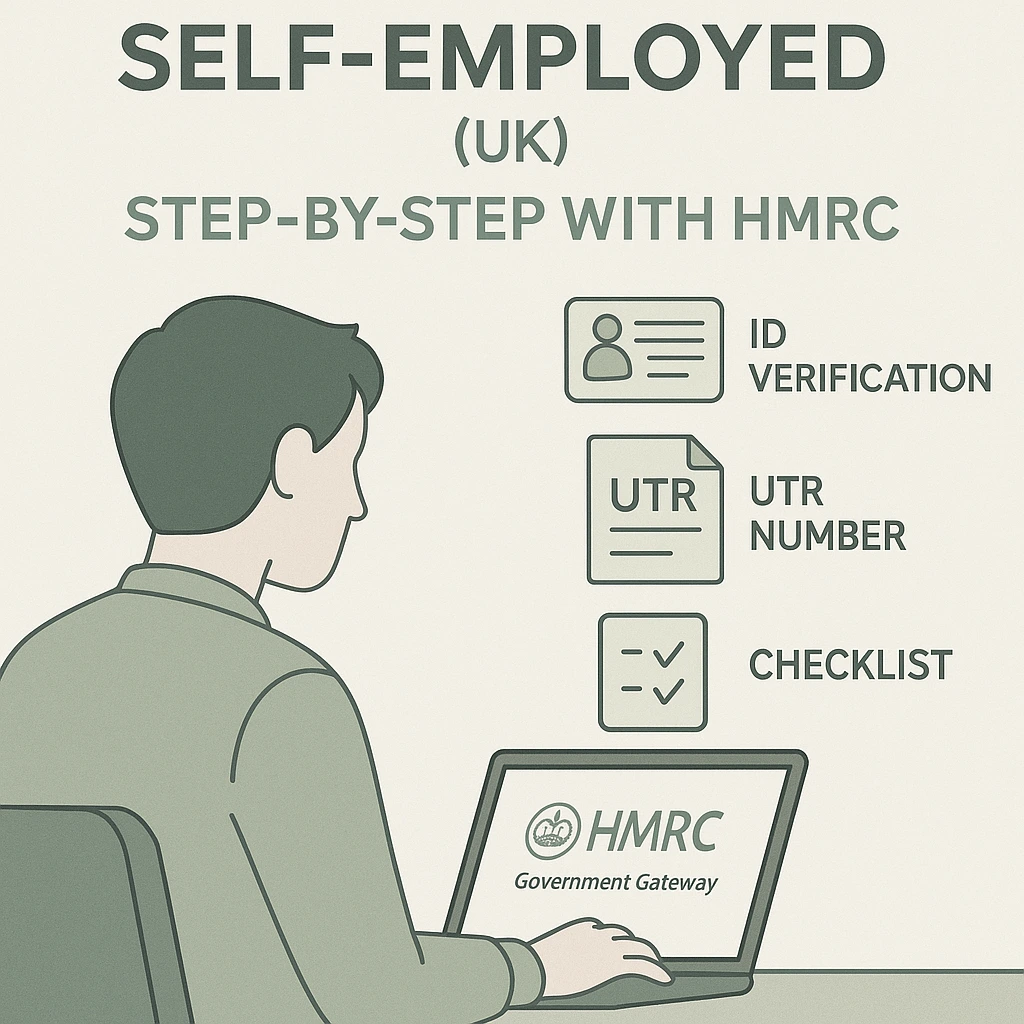
Registering as Self-Employed with HMRC: Step-by-Step UK Guide
Learn how to register as self-employed with HMRC, set up your Government Gateway account, and manage your tax duties. Follow this simple step-by-step guide.
How to Register as Self-Employed with HMRC: A Step-by-Step Guide
When you start working for yourself, registering as self-employed with HMRC is essential. This registration ensures you are compliant with tax laws and National Insurance Contributions (NICs). Understanding the steps to register and your subsequent responsibilities is crucial for managing your self-employment effectively.
Steps to Register as Self-Employed
- Create an Online Account Visit gov.uk to register for an online account.
- Receive Your Details Wait for your registration details to arrive by post.
- Complete Registration Use your Government Gateway details to complete the registration, providing information about your business, such as your trading name and contact details.
Responsibilities Post-Registration
Once registered as self-employed, you have several ongoing obligations
- Annual Self Assessment Tax Return You must complete and submit this to HMRC each year.
- National Insurance Contributions Ensure you understand the NICs you need to pay based on your earnings.
- Record Keeping Maintain accurate and up-to-date records of your income and expenses to facilitate tax filing.
Managing Your Tax Responsibilities
Filing a Self Assessment tax return involves calculating your taxable income and understanding allowable expenses. HMRC provides tools and resources to help with this process, but you may also consider seeking professional accounting advice to ensure accuracy and compliance.
Benefits of Proper Registration
Proper registration and adherence to HMRC requirements can offer several benefits:
- Legal Compliance Avoid penalties and legal issues by staying compliant with tax laws.
- Financial Clarity Keep clear financial records, aiding in business management and financial planning.
- Access to Benefits Being properly registered can also help you access certain benefits and protections available to self-employed individuals.
Conclusion
Registering as self-employed with HMRC is a crucial step for anyone starting their own business. Following the correct procedures and understanding your responsibilities ensures legal compliance and effective management of your self-employment status. By staying informed and organised, you can focus on growing your business and achieving your professional goals.

About Golden Tree Consulting
AAT Licensed | ACCA Affiliated
Golden Tree Accounting & Business Consulting provides expert tax, bookkeeping, and advisory services to sole traders and SMEs across Croydon, London, Surrey, and Kent. With multilingual support and decades of combined experience, we help businesses stay compliant and grow.
More Articles You Might Like
Continue exploring our financial insights
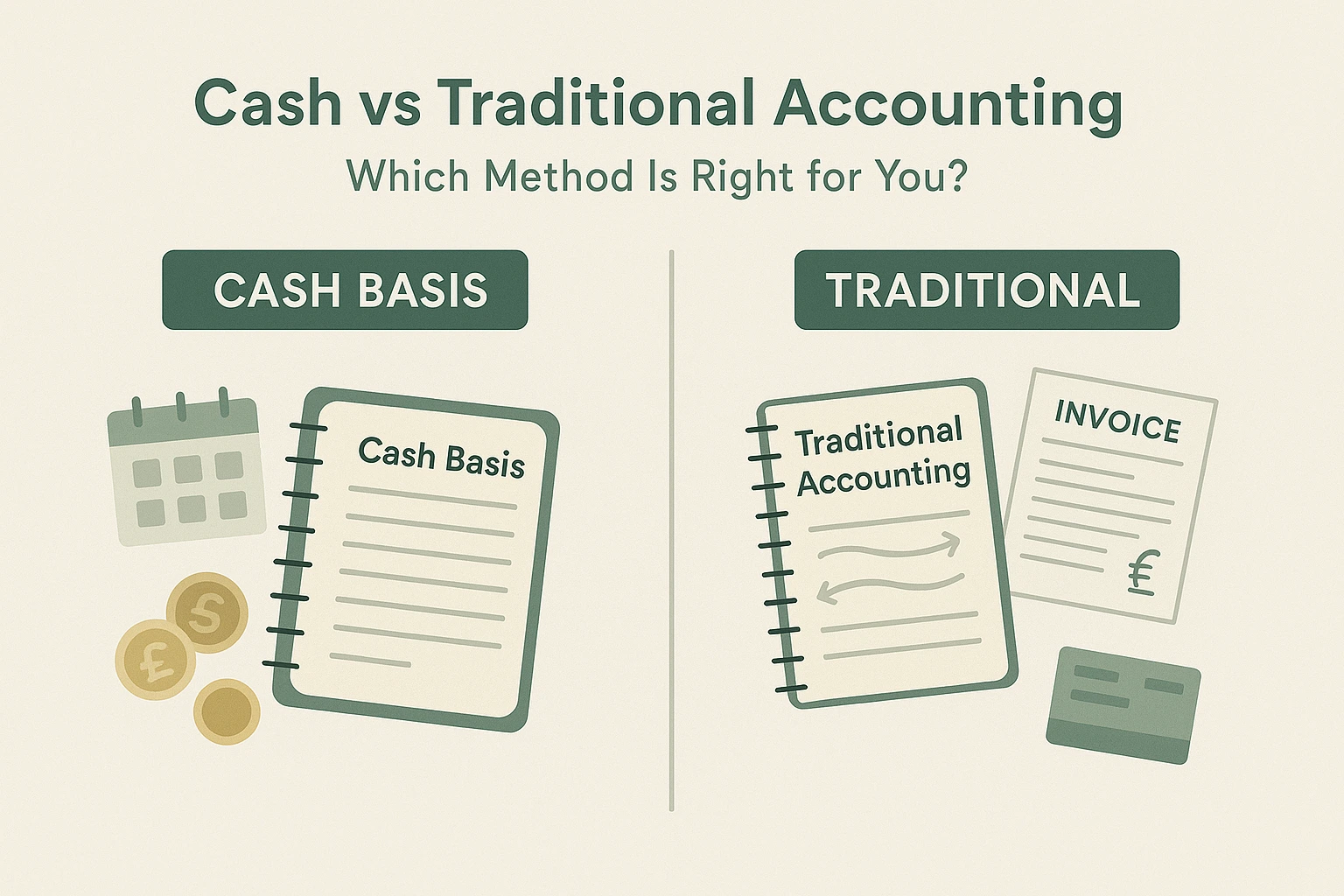
Cash Basis vs Traditional Accounting: Which Is Right for Your Business?
Understand the difference between cash basis and traditional accounting. Learn which method is best for your business structure, especially if you’re a sole trader or in a partnership.
Self Assessment Tax Returns UK: What You Need to Know
Learn who needs to file a Self Assessment tax return in the UK, important deadlines to remember, and top tips for accurate tax reporting.

MTD for Income Tax UK: April 2026 Checklist for Sole Traders and Landlords
MTD for Income Tax starts in April 2026 for many sole traders and landlords. Use this practical checklist to get ready, avoid penalties, and file with confidence.