Sole Trader Guide UK: Responsibilities, Setup & Self-Employment Explained
Thinking of becoming a sole trader? Learn what self-employment involves, your responsibilities, and how sole traders differ from LTDs or partnerships in the UK.
Read moreGolden Tree's accountants in Croydon and London Bridge handle everything for the self-employed — from HMRC registration and expense tracking to annual tax returns and ongoing compliance support.
5.5M+
Self-Employed in UK
100%
HMRC Compliance
£1000s
Tax Savings
Business Documentation
Business Owner
Jane Smith
UTR
9876543210
Business Details
Business Name
Smith Consulting
Started
01/04/2022
Business Type
Sole Trader
Registered
✓ Yes
Allowable Expenses
Verified
The term itself says — working for yourself, running your own business. Being self-employed is both an employment and a tax status. It covers a wide range of people, from those running their own business to freelancers and people working in the gig economy.
Self-employed could be classified as a sole trader or a partner in a business partnership if there are two or more partners. Once registered as self-employed, you'll have numerous obligations and responsibilities, including completing an annual Self Assessment tax return.
Discover how our expert support can help you establish, manage, and grow your self-employed business.
Our expert team guides you through the entire process of registering your business with HMRC and other relevant authorities, ensuring compliance from day one.
We help you set up and maintain comprehensive financial records, ensuring all your business transactions are properly documented and organized for tax purposes.
Maximize your allowable expenses and deductions with our strategic tax planning services, helping reduce your tax liability while maintaining full compliance.
We provide continuous support for all your self-employment needs, including Self Assessment returns, National Insurance contributions, and adapting to changing tax legislation.
As a self-employed individual, you're responsible for keeping records of your business activities. These records are essential for preparing your tax return and demonstrating compliance to HMRC if required.
Our record-keeping and accounting services help self-employed individuals maintain organized, compliant business records without the stress. We can set up efficient systems, provide regular bookkeeping support, and ensure all your documentation is ready for tax filing and any potential HMRC inquiries.
You must keep your records for at least 5 years after the 31 January submission deadline for the relevant tax year. This is crucial for responding to any future queries from HMRC, which can occur several years after filing. Our services include secure, organized record storage to help you meet this requirement.
A streamlined approach to helping you establish, manage, and grow your self-employed business.
We assess your business needs, discuss your goals, and create a customized plan for your self-employment journey.
We handle your HMRC registration, establish record-keeping systems, and create a business financial structure.
We provide regular bookkeeping, accounting services, and practical business advice as your operation grows.
We handle your Self Assessment tax returns, ensure all regulatory deadlines are met, and optimize your tax position.

As a self-employed individual, you can deduct certain business expenses from your taxable profit. Understanding and properly claiming these expenses is crucial for minimizing your tax liability:
Stationery, phone bills, computer equipment, software subscriptions, and other essential office supplies used for your business activities.
Fuel, parking, train or bus fares, and other travel costs related to business activities (not including travel between home and your usual place of work).
Salaries, wages, bonuses, subcontractor payments, employer's National Insurance contributions, and other costs related to employing staff.
Insurance premiums, bank charges, interest on business loans, professional fees for accountants and lawyers, and other financial-related expenses.
Our expert team helps you identify all legitimate business expenses and ensures you have proper documentation to support your claims. This is crucial not only for maximizing your tax deductions but also for providing evidence in case of any HMRC inquiries. We'll help you create a system for tracking, categorizing, and documenting all your business expenses efficiently.
Rent, utilities, business rates, property insurance, security, maintenance, and repairs for business premises. If you work from home, you may be able to claim a portion of your household expenses.
Website costs, social media advertising, print media, business cards, brochures, promotional events, and other marketing activities designed to attract customers to your business.
Inventory, raw materials, components, and other goods that you buy to sell on or use in producing products sold by your business. These are often a significant expense for retail and manufacturing businesses.
Courses, seminars, books, and subscriptions that are directly relevant to your business and help you maintain or improve your skills and knowledge. This shows HMRC you're committed to professional growth.
It's important to understand that not all business-related expenses qualify for tax deductions. The following are generally not allowable:
Our expert team provides tailored financial guidance to help your business thrive. Book a consultation today and experience the Golden Tree difference.
Vorontsov Consulting Services LTD
"Partnering with Golden Tree Consulting has been one of the best decisions for us. Their financial strategies have significantly reduced our expenses and their exceptional communication keeps us well-informed."
Common questions about self-employment in the UK.
You're generally considered self-employed if you run your own business as an individual and are responsible for its success or failure, decide when and how you work, and have multiple customers or clients simultaneously. This includes freelancers, contractors, and those working in the gig economy. If you're unsure about your status, our team can help you determine the correct classification based on your specific circumstances.
As a self-employed person, you must maintain comprehensive records including: 1) Sales and income records (invoices, till rolls, bank statements), 2) Business expenses receipts and documentation, 3) VAT records if registered, 4) PAYE records if you employ others, 5) Personal income records, and 6) Grant payments received. All records should be kept for at least 5 years after the January 31 Self Assessment deadline for the relevant tax year. Our services include setting up efficient record-keeping systems tailored to your specific business needs.
Self-employed individuals can claim various business expenses including: 1) Office costs (stationery, phone bills, software), 2) Travel expenses (fuel, parking, public transport for business purposes), 3) Staff costs (salaries, subcontractor payments), 4) Business premises costs (rent, utilities, business rates), 5) Financial costs (insurance, bank charges), 6) Marketing and advertising expenses, 7) Training courses related to your business, and 8) Stock and raw materials. Personal expenses cannot be claimed. Our tax specialists will help you identify all legitimate expenses to optimize your tax position while ensuring compliance.
Self-employed individuals must register with HMRC, complete annual Self Assessment tax returns, pay Income Tax on profits, and pay two classes of National Insurance: Class 2 (flat weekly rate) and Class 4 (percentage of profits). You'll typically make payments twice yearly, with payment deadlines on January 31 and July 31. Additionally, if your turnover exceeds the VAT threshold (currently £85,000), you'll need to register for and pay VAT. Our comprehensive services include handling all these obligations, ensuring timely payments, and helping you budget appropriately for tax liabilities.
Explore our latest insights and guides on this topic.

Thinking of becoming a sole trader? Learn what self-employment involves, your responsibilities, and how sole traders differ from LTDs or partnerships in the UK.
Read more
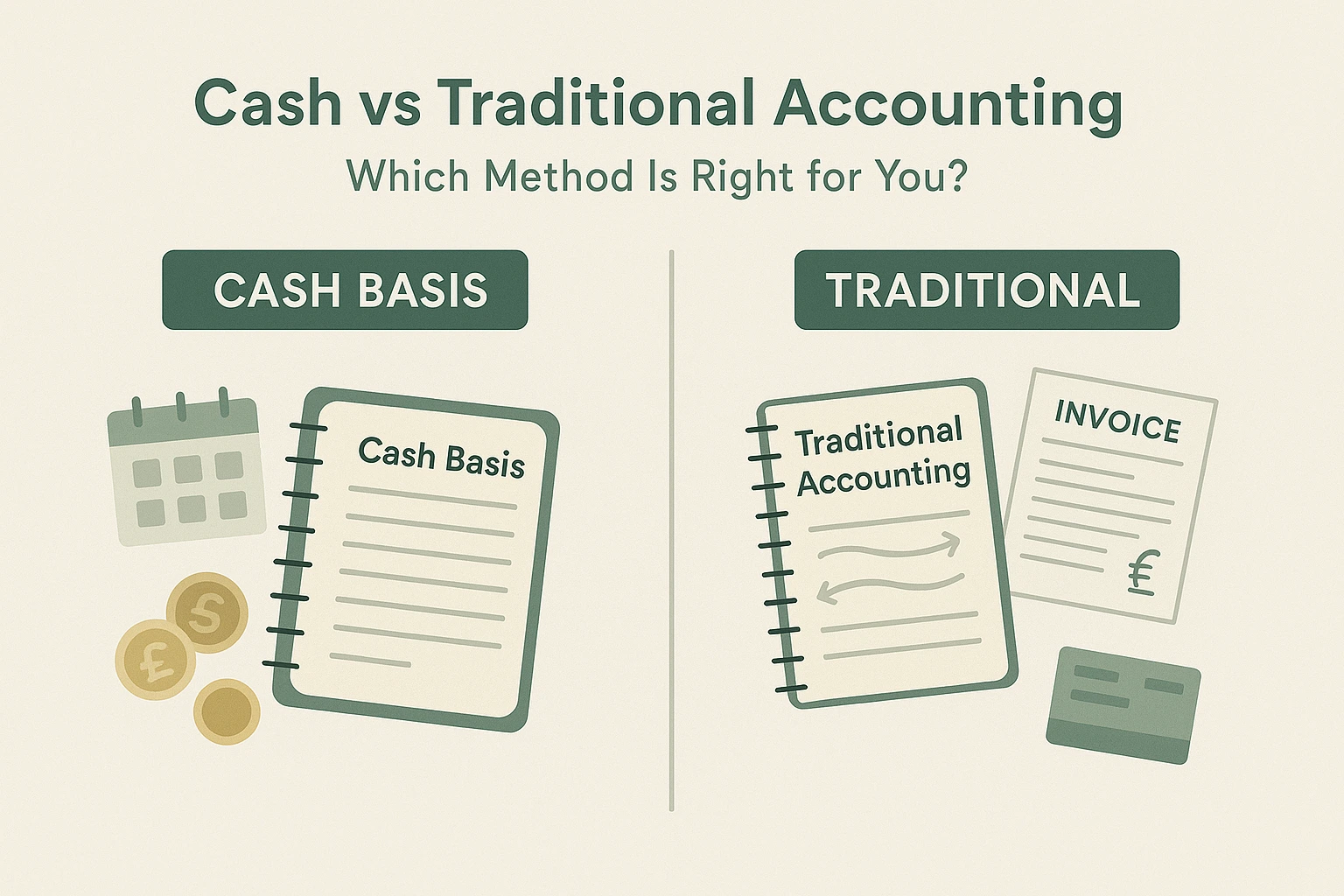
Understand the difference between cash basis and traditional accounting. Learn which method is best for your business structure, especially if you’re a sole trader or in a partnership.
Read more
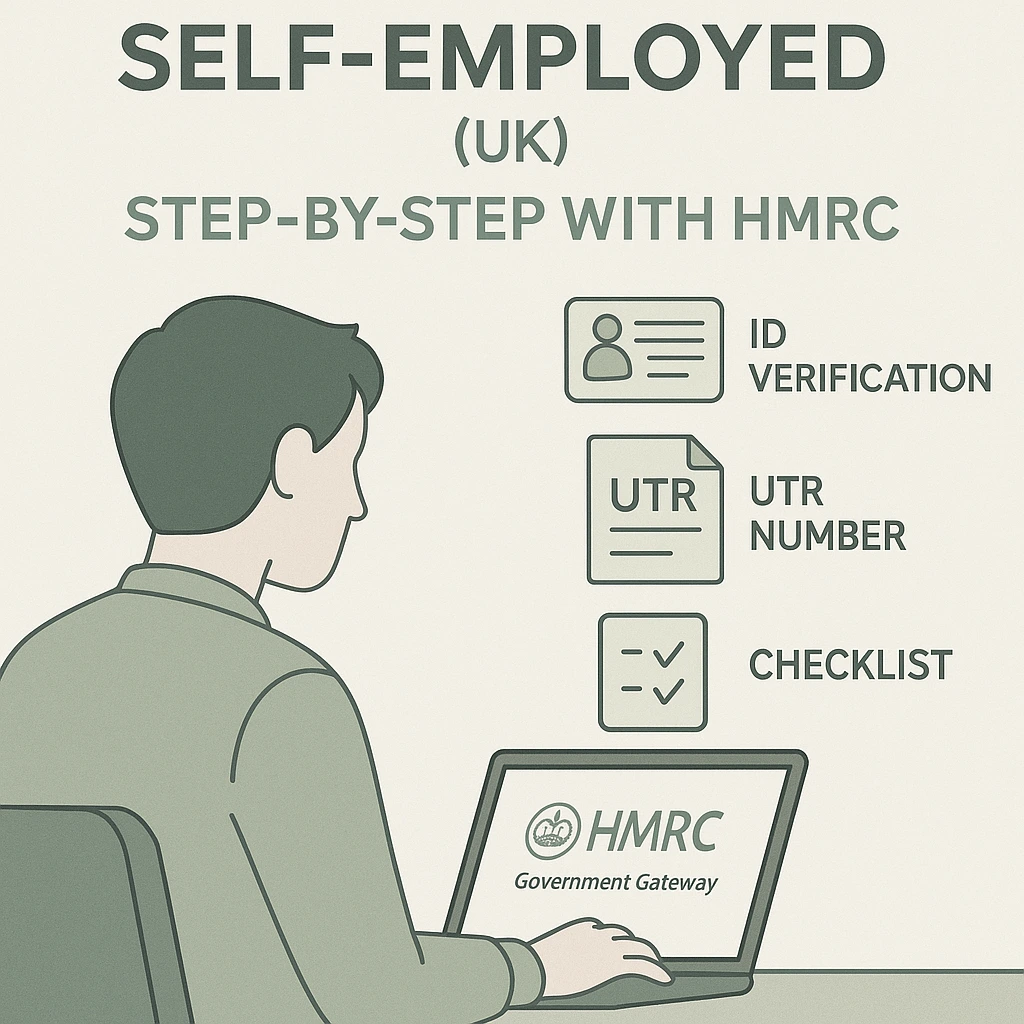
Learn how to register as self-employed with HMRC, set up your Government Gateway account, and manage your tax duties. Follow this simple step-by-step guide.
Read moreDon't just take our word for it – hear from the businesses we've helped.
Partnering with Golden Tree Consulting has been one of the best decisions for us. They have consistently applied for everything on time, ensuring we never miss a deadline, and their financial strategies have significantly reduced our expenses. Their exceptional communication keeps us well-informed and confident in their handling of our finances. We highly recommend their services to any firm in need of top-notch accounting expertise.
Director , Vorontsov Consulting Services LTD
Golden Tree Consulting have been a game-changer for UK Scent Shop. Their timely applications and meticulous financial management have saved us a significant amount of money. Their communication is outstanding, keeping us informed every step of the way. We couldn't be happier with their services and highly recommend them to any business looking for reliable and efficient accounting support.
Director , UK Scent Shop
We have been using the services of the Golden Tree company for 2 years. During this time, we have always received professional support on all issues, quickly and efficiently. We thank the entire team for their excellent work. Without a doubt, we recommend Golden Tree as a reliable partner for your business.
Director , AK Construction Services
Let us help you take your business to the next level. Fill out the form and our team of expert accountants will get in touch with you promptly.