
What Do Designated Partners in an LLP Actually Do? Roles, Duties & Legal Requirements in the UK
Explore the key duties of designated partners in a UK LLP. Learn their legal responsibilities, how to register, and ensure full compliance with Companies House.
Designated partners in a Limited Liability Partnership (LLP) play a pivotal role in ensuring the smooth operation and legal compliance of the entity. Consequently, this bears significant responsibilities akin to those of company directors and secretaries. As a result, their role is both demanding and essential. Therefore, understanding these responsibilities is crucial for anyone involved in or considering a Limited Liability Partnership.
Additionally, registering an LLP with Companies House you need two or more members, and at least two of them must be “designated”.
Furthermore the duties of designated LLP members are similar to those of limited company directors of companies and company secretaries, and have exactly the same rights and obligations, plus additional:
-
Register an LLP for
with HMRC.
-
Registering a Limited Liability Partnership for a VAT payer (if necessary)
-
Register a Limited Liability Partnership as an employer and create a PAYE.
-
Maintenance of mandatory Limited Liability Partnership registries, including the PSC registry
-
Maintain accounting records
-
Preparation and submission of annual reports
-
Submit your tax returns.
-
Ensuring all PAYE tasks have been completed
-
Appoint an accountant and / or auditor
-
Notify Companies House of any changes.
-
Sign contracts and other documents.
-
Represent the Limited Liability Partnership in any legal proceedings.
-
Acting behalf of the company if it is liquidated or dissolved.
Also any additional management duties set out in the Limited Liability Partnership agreement
Designated members are legally liable if they fail to fulfill their statutory responsibilities.
Who can be a Designated LLP Member?
Any individual can be a regular member or a designated member of the Limited Liability Partnership, unless they:
- under the age of 16
- deprived of the right to act as a member of the LLP or director of the company
- are a failed bankrupt
Moreover each limited liability partnership must formally appoint at least two designated members. As a result, if your Limited Liability Partnership only has two members at a time, both members will be nominated. If you do not appoint at least two designated members, Companies House will automatically consider all members designated.
To change the status of a current Limited Liability Partnership member from Regular to Designated or Designated to Regular, the form must be completed and filed with Companies House within 14 days.

About Golden Tree Consulting
AAT Licensed | ACCA Affiliated
Golden Tree Accounting & Business Consulting provides expert tax, bookkeeping, and advisory services to sole traders and SMEs across Croydon, London, Surrey, and Kent. With multilingual support and decades of combined experience, we help businesses stay compliant and grow.
More Articles You Might Like
Continue exploring our financial insights
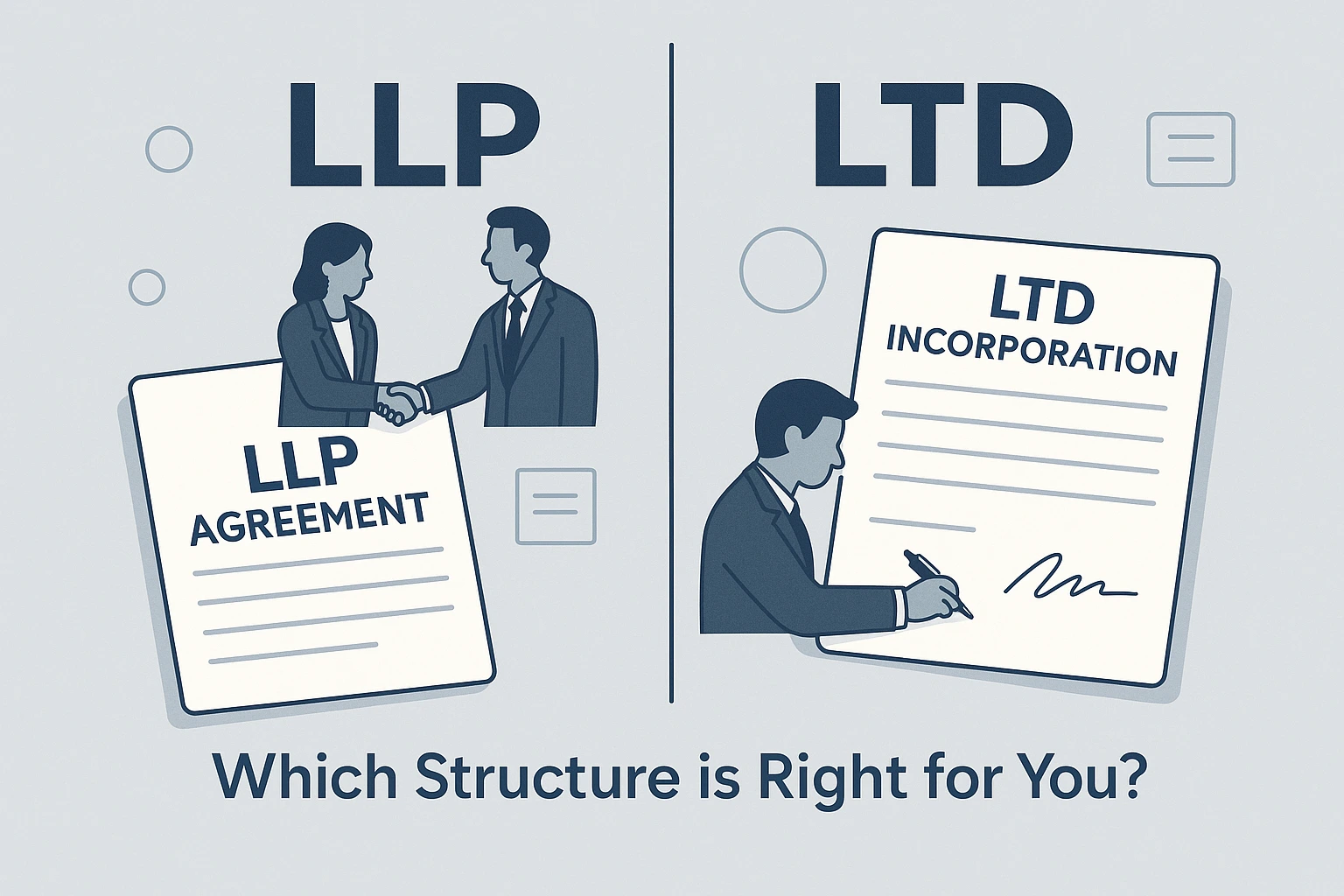
LLP vs LTD: Key Differences in UK Business Structures Explained
Compare LLP and LTD business structures in the UK. Learn the pros, cons, and legal differences to choose the best setup for your new business.
LLP Structure Explained: Key Roles, Legal Duties & Benefits
Understand how Limited Liability Partnerships work, the responsibilities of designated members, and how LLPs compare to LTDs for UK professionals.

Payrolling Benefits in Kind UK: 5 April 2026 Deadline Guide for Employers
Payrolling benefits in kind can cut year-end admin. Use this UK guide to meet the 5 April 2026 deadline, avoid P11D mistakes, and plan Class 1A NICs.